How co-production can drive real change in care equity
On this page
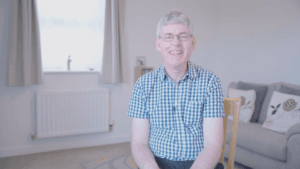
David Cole lives in Dorset, draws on adult social care, and delivered a Big Chat session at NCASC 2025. He is a Quality Assurance Lived Experience Adviser at the council and shares his reflections for Co-production Week’s 2026 theme ‘Care Equity’.
Q: As someone who has lived experience of drawing on care and support over many years how do you think co-production can drive real change in care equity?
A: I believe co-production can drive real change in care equity as it opens discussions around equality, diversity and inclusion. This enables inequalities and barriers to care based on people’s own circumstances and characteristics, including those protected in the Equality Act 2010 to be highlighted, understood and addressed. It’s from here that better and more equitable access to opportunities, care services and outcomes can be achieved. Lived experience provides insights from those directly drawing on care and support services, as well as carers, family members and friends. Incorporating these perspectives into engagement and co-production work can build trust, improve outcomes and strengthen community connections. It also helps professionals understand what works well and what does not. This leads to more effective and responsive services for different people in society.
Q: How do you think co-production is shaping innovation in social care?
A: The whole concept of co-production, and that of listening to the voice of lived experience, is innovative in itself. Before the Care Act 2014 emphasised the importance of engagement and co-production being used as a means of delivering shared influence in decision-making, it didn’t appear that this was happening. But now it is being put at the centre. This gives people with lived experience a real opportunity to have their voices heard and the ability to shape services into what works for them. The priority now given to lived experience was clearly in evidence at NCASC in 2025. With a good co-production and engagement framework in place, the process of undertaking co-produced projects can be streamlined and made more effective. Co-production also requires belief, promotion, input and an understanding of its aims from people at every level of an organisation.
Q: Tell us more about your involvement with the Big Chat Sessions at NCASC?
A: I have lived experience of drawing on care and support over many years due to epilepsy and mental health difficulties and I have also been a carer. The Big Chat sessions are co-produced and hosted by people with lived experience who share their insights of drawing on care and support. They are coordinated alongside local authorities and other organisations across adult’s and children’s social care. In my session, I spoke on my own chosen themes of engagement, co-production and technology enabled care which I’ve personally benefited from. At the time, I had been a member of a lived experience group, called the Quality Assurance Reference Group for over a year. This group was organised by the Adults and Housing Directorate at Dorset Council. Since then, I’ve been recruited as their first paid Quality Assurance Lived Experience Adviser in Adult Social Care. The experience at NCASC helped me gain greater confidence in situations I would previously have avoided and the opportunity to research the issues I wished to speak about. I later shared my story as part of ADASS’ Care Can’t Wait campaign and the film was premiered at their annual national Spring Seminar conference.
Q: What value do you think these types of Big Chat conversations bring to the adult social care sector?
A: The Big Chat conversations give people with real world lived experience the opportunity to talk about issues that are truly important to them and to have their views and ideas listened to by policymakers, managers, professionals and other stakeholders attending the conference. This shows that listening to lived experience is vitally important and just how much benefit can be gained from giving people who draw on care and support that opportunity.
Read David’s story
Dave’s story: ‘No one knows what is coming around the corner’