Shaping the adult social care research agenda – building on the ADASS Spring Seminar 2026
On this page
Chris Lehmann, ADASS Research Committee Chair, and Professor Catherine Needham, Professor of Public Policy and Public Management at the University of Birmingham, report back from an exciting research workshop at our recent Spring Seminar conference.
They discuss the challenges for our members in undertaking research projects in adult social care, the four untapped key areas for inquiry, the broader questions surrounding these themes, and the opportunity for social care practitioners to pursue research projects.
Over the past year, the ADASS Research Committee has heard from colleagues that research continues to be a priority area with significant scope for impact. However, for those not based in universities or embedded in research activities, identifying evidence and outcomes to support their work presents significant challenges. There is a lack of opportunities to bring together shared strategies for planning how to shape future plans for research, including where we know that focused work should be taking place.
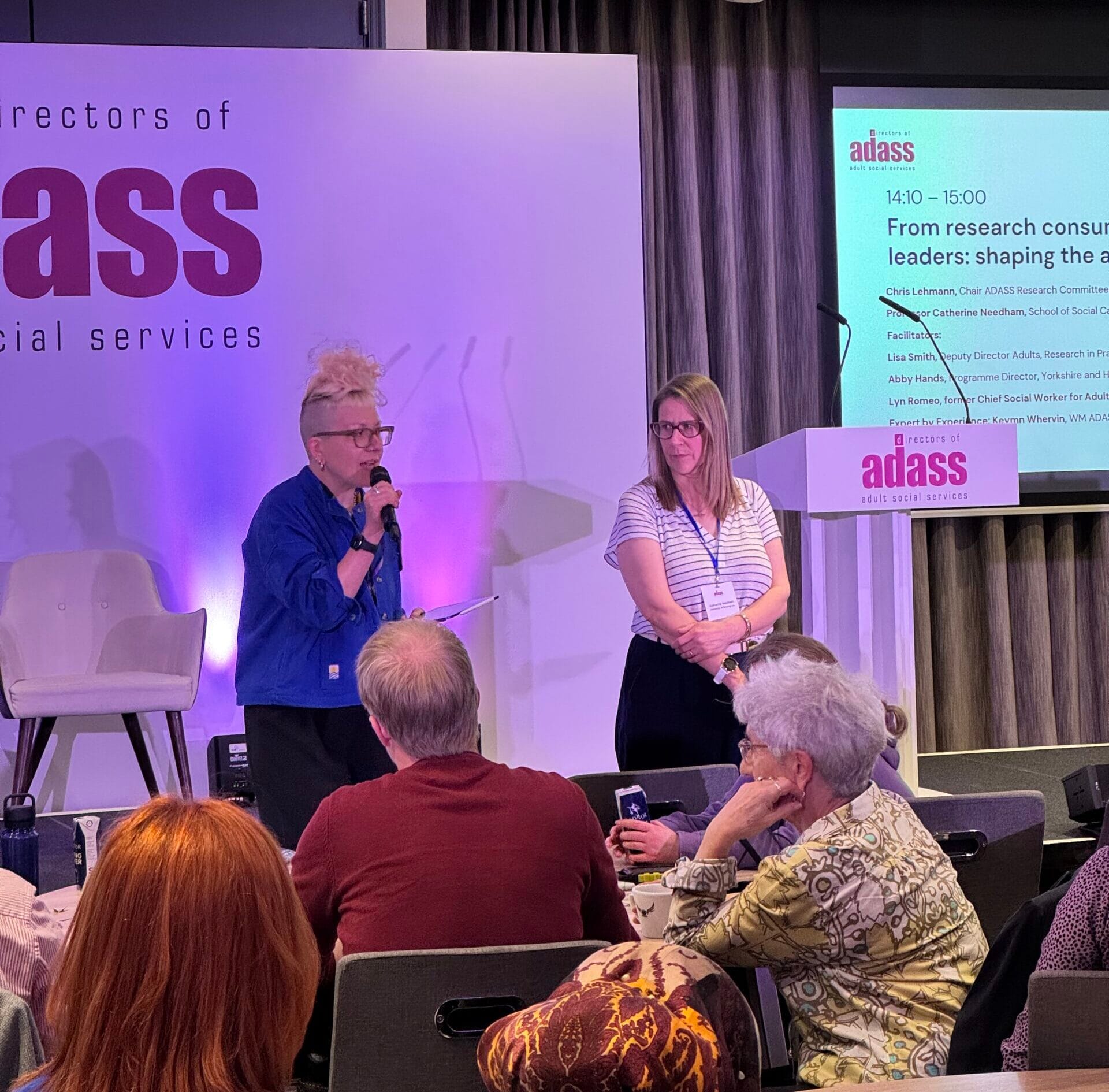
With the above in mind, the workshop hosted by the Committee at the ADASS Spring Seminar this year asked the question, ‘what are the key research gaps in social care and how can these be filled?’
Key areas for research
Through the partnership between ADASS and the NIHR School for Social Care Research (SSCR), we worked in advance of the session to identify four areas where more research would be particularly welcome:
- Carers and unpaid care
- Equalities and inclusion
- Partnership and early intervention
- New models of health and care
Table discussions at the research workshop focused on developing research questions and themes from these broad topics. For example, in relation to carers, attendees wanted to know more about the interaction between paid and unpaid carers and what happens to unpaid carers when the caring role ends.
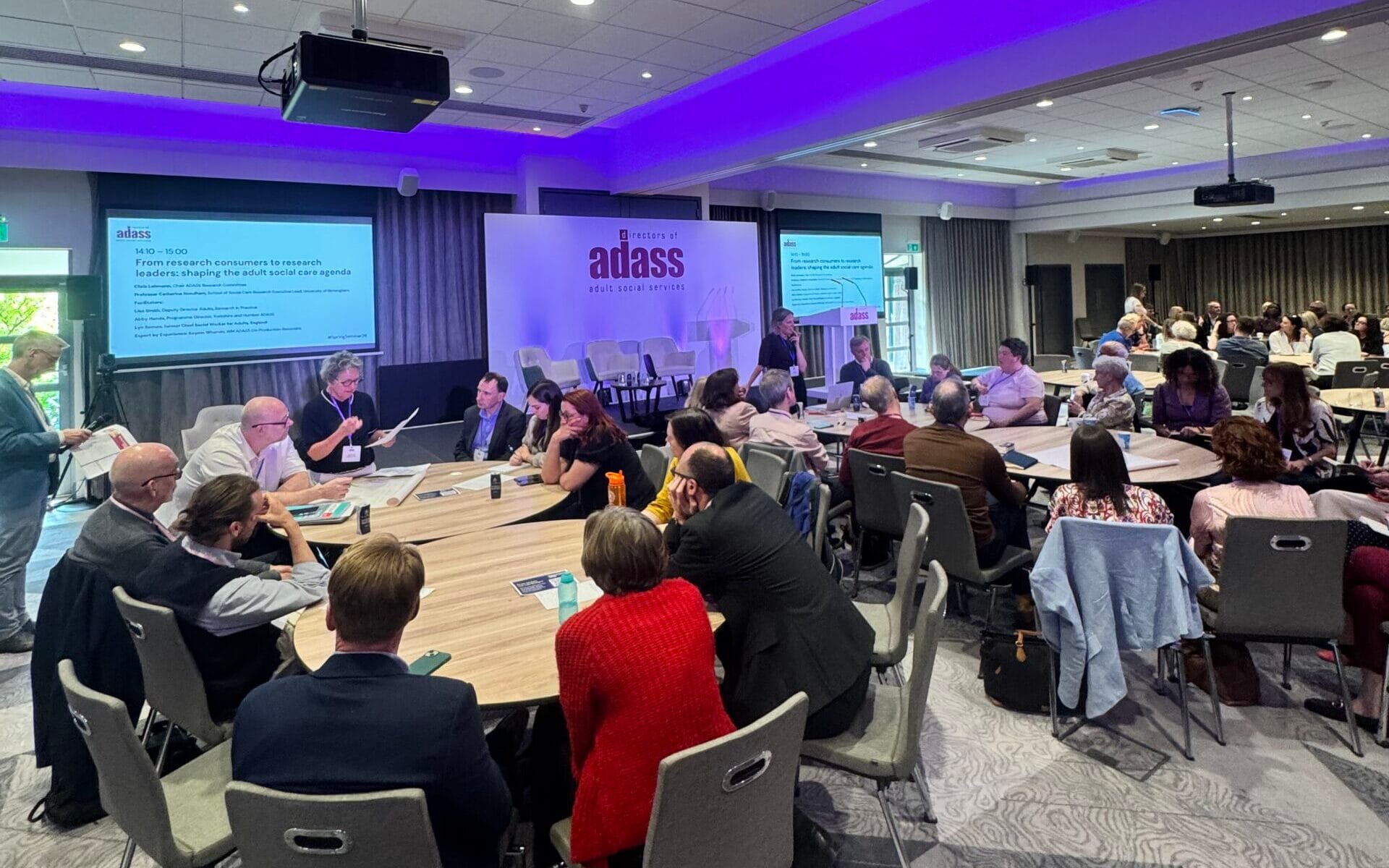
On the topic of equalities and inclusion, questions raised included the implications of increased usage of artificial intelligence and how to support people with a learning disability who experience multiple disadvantage.
In relation to partnership and early intervention, all the familiar questions were raised, including how we use data better and how we evidence what works. In addition, there was a recognition that work needs to be done about how we mainstream prevention across local authorities, including working more closely with Public Health, so it isn’t seen as sitting solely with Adult Social Care.
On new models of health and care, the discussion focused on learning from integrated care, and where new models are bedding in (despite signs from e.g., Torbay, that integration is hard to sustain over the long-term). The impact of local government reorganisation on health and care models and on social care more broadly was also suggested as an area for research.
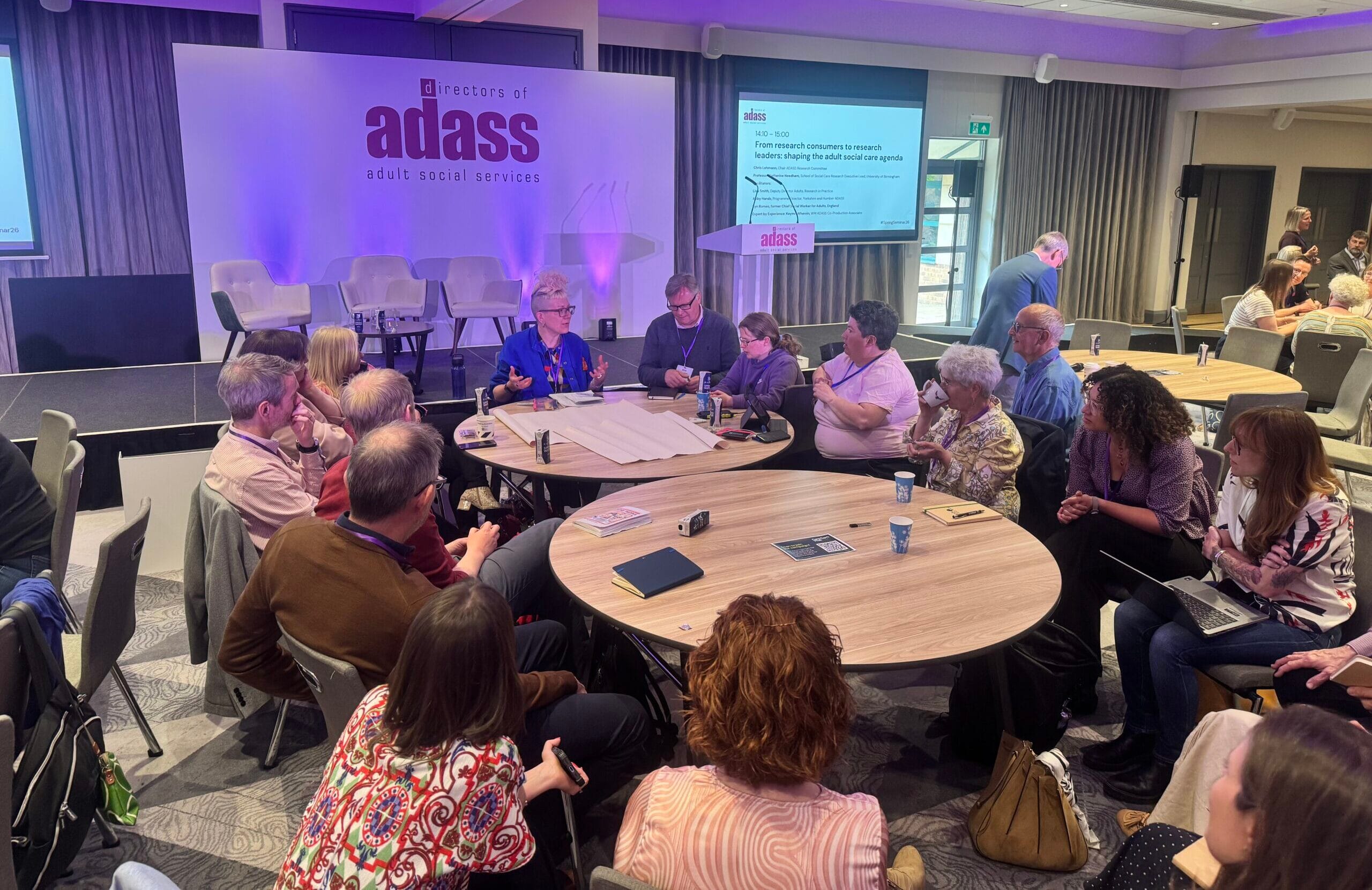
There are several avenues to take forward these research topics identified by colleagues during our workshop. For academic researchers, the list provides stimulus for new grant applications and will be shared through the School for Social Care Research. For practitioners working in local authorities, there are opportunities to pursue research through NIHR schemes such as pre-doctoral and doctoral awards. The Research Support Service Specialist Centre for Social Care is keen to support practitioners who want to develop research ideas.
But the key message – which underpins the partnership between ADASS and SSCR – is that research is a shared endeavour. Academics, practitioners and people with lived experience of care need to work together to shape research questions, build project teams and develop impactful findings. The ADASS Research Committee will continue to actively support and shape work in this space, and we welcome colleagues’ input as we develop a roadmap for the sector’s approach to research over the coming year.
Chris Lehmann is the ADASS Research Committee Chair and Catherine Needham is a Professor of Public Policy and Public Management at the University of Birmingham and Associate Director of the NIHR School for Social Care Research.